
MeitY had stated there was a need to set up GACs as grievance officers hired by the platforms often did not address issues satisfactorily.

At the outset, all eyes will be on the Lok Sabha Secretariat on Monday when it is expected to review the stay granted by the Supreme Court on the conviction of Rahul Gandhi in the 'Modi surname' case and decide on the revocation of his Parliament membership.

Many who track the ministry and the technology sector closely believe that the space won't see much impact on the policymaking side, but the gestation time for regulations might get long, as now there could be a wider consensus-building exercise on policy matters under a coalition government.

The Centre's claim has been made in an additional affidavit filed in response to several pleas challenging the new privacy policy of WhatsApp.

The company has set an internal target of 6-18 months to set up the data centre. The plan is part of the $1 billion ByteDance has recently committed to the Indian market over the next three years.

It is sad that the legislative pre-consultation on such an important bill is being done in a very biased manner, notes Shailesh Gandhi, former Central Information Commissioner, recounting his experience with Minister Rajeev Chandrashekhar.

There is a perception getting built inside the government that big technology companies -- a common term used for firms like Facebook, Google, Twitter, Amazon and the like - are becoming very powerful and present multiple threats to entire nations and their citizens today. The digital ecosystem is replete with CSAM (child sexual abuse material), fake news, drug trade, radicalisation, trolling among other social vices. Given the network effect that these platforms have, it is important to ensure that these platforms are not misused.

The number of cyberfraud cases has skyrocketed from 2,677 in 1999-2000 to 29,082 in FY24 -- more than a 10-fold increase. The RBI pegs digital payment frauds at Rs 1,457 crore in FY24, up more than five times in a year. It's not just the number of frauds. What's alarming is the growing sophistication of the fraudsters, exposing the vulnerabilities within the financial system, observes Tamal Bandyopadhyay.

The government asked digital platforms to provide technical and business process solutions to prevent and weed out misinformation that can potentially harm society and democracy, Union Minister Ashwini Vaishnaw has said.

The productivity of the Budget session was abysmal. The Lok Sabha functioned for 33% of its scheduled time (46 hours); the Rajya Sabha 24% (32 hours).

The Congress' chief whip Jairam Ramesh, said, 'Today, too, the INDIA parties demanded the prime minister's presence in the Rajya Sabha to make a statement on Manipur, to be followed by a discussion.'

The opposition will seek to target the government on the issue of farmers' plight as well as their demand for a legal backing for minimum support price.

He said the Aadhaar programme violated informational privacy, self-determination and data protection.

India is unlikely to join the ongoing negotiations for a plurilateral deal on e-commerce at the World Trade Organization (WTO), notwithstanding a change in stance on data localisation and cross-border flow of data. Under the new draft digital personal data protection (DPDP) Bill, put out on Friday for public consultation, the government has proposed free cross-border flow of data with 'friendly' nations, significantly easing its earlier stance on data localisation. India has so far stayed out of a group of 87 countries, including the US, European Union, China, and Japan that are negotiating trade-related aspects on e-commerce since December 2017.

Tharoor argued that the proposed bill represents a "grave chapter in the history of the Indian republic, seeking to ratify an ordinance that in many ways is an assault on our democratic heritage and the spirit of federalism."

Ashok Kumar Gupta, chairman of the Competition Commission of India (CCI), has never minced words while talking about the giant technology companies, referring to them on multiple occasions as "centres for entrenched and unchecked dominance". The anti-trust regulator has, in fact, been cracking down on big technology companies such as Google, Apple, Facebook, and others, after they were hauled up by regulators and lawmakers in Europe and Australia. However, in several instances, existing regulations have prevented the CCI from going all out against these companies for anti-competitive activities.

Admittedly, EVMs too have a UID number and any convergence of data can make the secret ballot system a party of history, warns Dr Gopal Krishna in the 5th part of his series against Aadhaar.

Finance Minister Nirmala Sitharaman on Tuesday said the government is working out a new Bill on cryptocurrency which will be placed in the ongoing session of Parliament after approval of the Union Cabinet. The ongoing winter session is scheduled to end on December 23. Replying to a series of questions in the Rajya Sabha, she said the new Bill takes into account the rapidly changing dimensions in virtual currency space, and incorporate features of the earlier Bill that could not be taken up.

A company claims to run ads on Facebook where students are encouraged to provide their details to get help from career counsellors.

Chief Economic Adviser (CEA) K V Subramanian on Tuesday exuded confidence that India would achieve double-digit growth in the current financial year on the back of policy initiatives and continuing reforms. He also said the country is well poised to meet the fiscal deficit target of 6.8 per cent of GDP. "At this stage, I can say confidently that we should be able to achieve that fiscal deficit number. "Any shortfalls that might happen on the disinvestment side will also be accompanied by positive surprises that have happened on tax revenue," he told reporters.

Both Lok Sabha and Rajya Sabha did not see a debate on the Manipur violence, but Prime Minister Narendra Modi and Home Minister Amit Shah spoke on it during their addresses on the no-confidence motion.

For now, Modi's government appears singularly focussed on demonstrating that it is not in any way inhibited by the BJP's loss of a majority, and will continue along its patented path of bulldozing all opposition and doing just as it likes, asserts Prem Panicker.

The comments assume significance in the backdrop of recent disclosures by messaging giant WhatsApp that said Indian journalists and human rights activists were among those globally spied upon by unnamed entities using an Israeli spyware Pegasus.

Tech giant Microsoft has unveiled a blueprint for India on artificial intelligence (AI) governance, and proposed a regulatory architecture to oversee safety protocols, according to a whitepaper released on Thursday. The whitepaper titled "Governing AI: A Blueprint for India" comes amid Microsoft raising its stakes in its artificial intelligence tool ChatGPT. The proposed AI regulatory architecture includes regulations prescribing safety and security requirements, then license deployment for permitted uses in a licensed Al data centre with post-deployment safety and security monitoring and protection.

Extension of the deadline from December end this year till March 31, 2018, would apply only to those people who do not have Aadhaar and are willing to enrol for it.

The government, however, dismissed allegations of any kind of surveillance on its part on specific people, saying it 'has no concrete basis or truth associated with it whatsoever'.

Since payment alternatives such as UPI, e-wallets and USSD - based mobile banking through different platforms are directly or indirectly linked to the user's bank account one needs to be extra careful to keep hackers at bay, explains Adhil Shetty, CEO, BankBazaar.

"They have apologised for hurting Indian sentiments and have sworn to correct the error by November 30, 2020," she added.

Data localisation, an overarching theme across recent government policy proposals, has been a thorny issue with industry
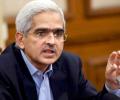
The increasing involvement of Big Tech in the financial system could give rise to concentration risk and there are potential spillovers, which call for closer attention, Reserve Bank of India (RBI) Governor Shaktikanta Das said on Tuesday. "...enormous amounts of consumer data is being generated and leveraged upon by a few entities (the so-called Big Tech) by virtue of their huge customer base. "Such developments raise concerns on concentration risk and potential spillovers as their level of engagement with the financial system strengthens in the years to come," Das said at the Global Fintech Fest 2022.

The advent of artificial intelligence, blockchain technology and cryptocurrencies, and the increasing use of Internet of Things devices throw techno-legal challenges regarding privacy and security. Experts say, any expansion of power to the government to block web-services is detrimental to the interests of users, innovation, and India's larger technology ecosystem. The move to block the mobile apps is likely to have a lasting impact on the data security and privacy framework.

'The striking down of the use of Aadhaar by private companies implicitly calls for the deletion or erasure of all personal data vested in the servers of the private service providers.'

'Just the amount of work which is there just to become more and more successful in banking. For this to happen you need to have leaders who understand technology.'
'The government's proposal to store citizens' data including Aadhaar data under its Digital India initiative on cloud is violative of the citizens' human rights because the cloud is admittedly beyond India's jurisdiction.'

WhatsApp was told to delete data of users who chose to opt out of its policy changes before September 25

'In the long run, I don't foresee major ramifications [about Trudeau's allegations].' 'There's just enough hypocrisy among Western nations for India to douse the outrage.'

The linking of biometric UID/Aadhaar number to all public services makes "We, the People of India" worse than slaves, says Gopal Krishna.

India does not have a stringent privacy or data protection Act.

In January, Visa's chief executive officer, Al Kelly, said during an earnings call that "there's been a burst of the balloon in valuations in the fintech world". Noting that the trend of lower valuations "is a helpful characteristic of the current environment", he added: "We will look for capabilities and management teams that will bring more value to Visa than we can bring ourselves." Data from KPMG's Pulse of Fintech H2'22 shows that global fintech investment - via mergers and acquisitions (M&As), private equity (PE) and venture capital (VC) firms - at $164.1 billion in 2022, was down 31 per cent over the year before. Indian fintechs held up better during this timeframe, attracting $6 billion, or a fall of 24 per cent.

Biometric authentication is based on the unscientific and questionable assumption that there are parts of human body that does not age, wither and decay with the passage of time.
 © 2026 Rediff.com - Advertise with us - Disclaimer - Privacy Policy - Sitemap - Feedback - About us - Terms of use - Grievances